Guangzhou has traded with the sea for more than 2,200 years — the starting port of the ancient Maritime Silk Road and, centuries later, the only Chinese port open to Western trade in the eighteenth century. Today it is a city of about 18 million on the Pearl River, and the self-assured capital of Cantonese culture: the language, the opera, and above all the table.
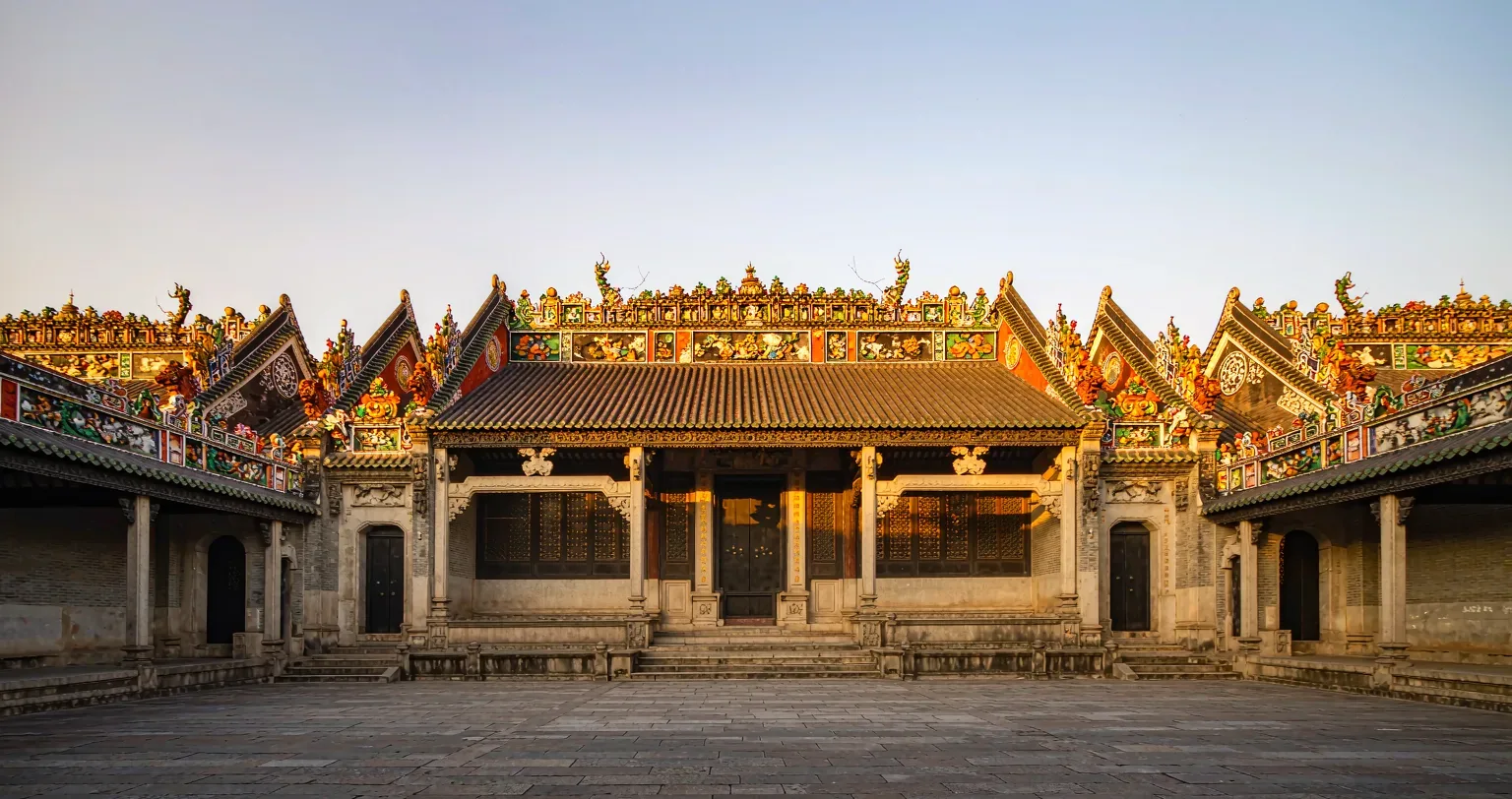
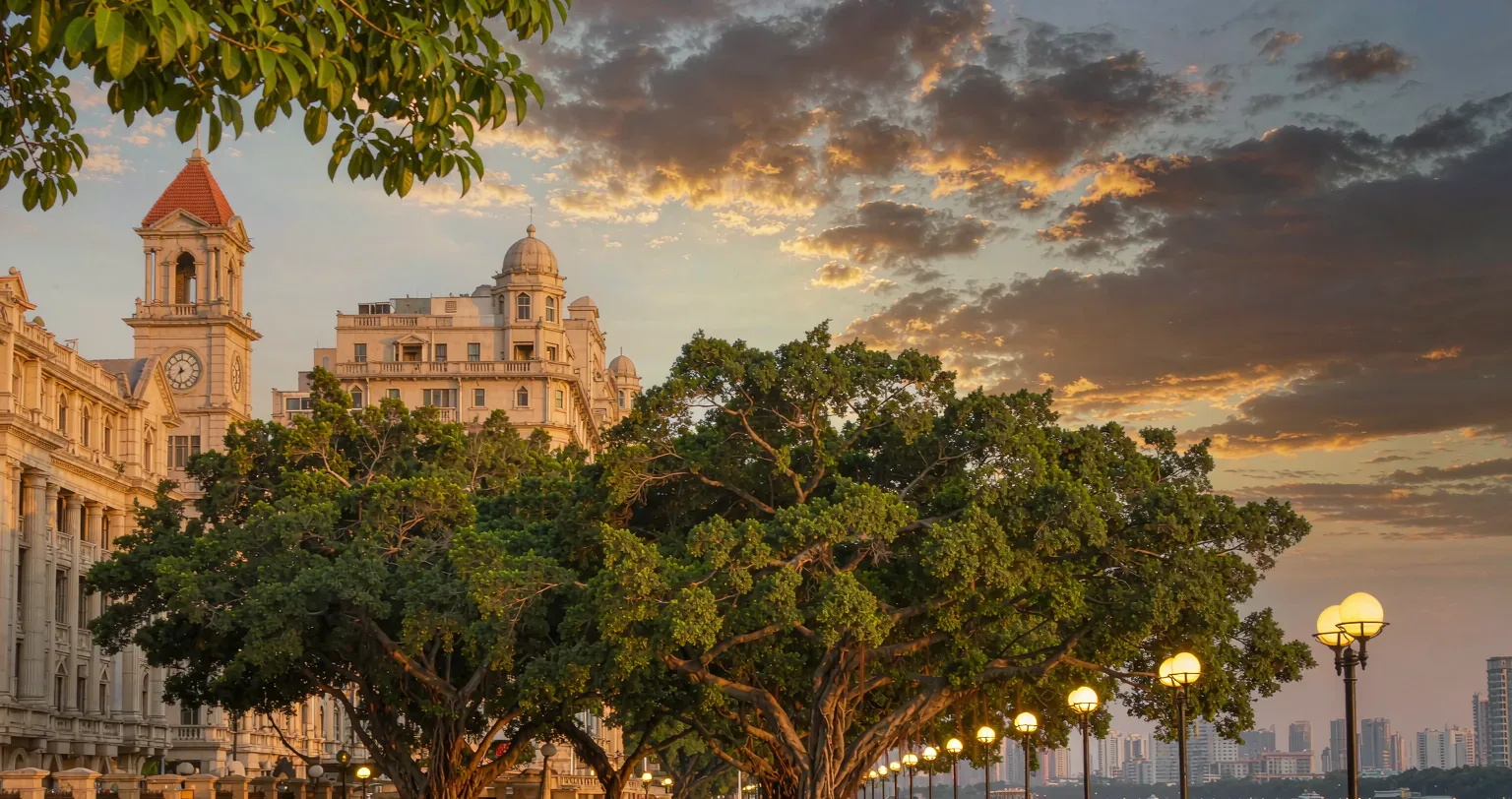
Life here is organised around eating. Morning tea — yum cha — fills the old teahouses from six a.m.: trolleys of har gow and siu mai, old men with newspapers, tea poured across the generations. The Chen Clan Ancestral Hall shows what that prosperity built; Shamian Island’s colonial arcades and banyan streets show who it traded with.
Guangzhou pairs naturally with the region: Foshan’s martial-arts and ceramic traditions next door, the watchtowers of Kaiping down the delta, and Hong Kong and Macau both reachable within the hour by high-speed rail.
For the record: about 18 million residents; 2,200+ years of continuous port history; a Canton Fair that has run every spring and autumn since 1957; and a dim-sum repertoire of well over two thousand items — our itineraries schedule morning tea where the carts, not the menus, still rule.
Five rams bearing rice ears
Five immortals rode five-coloured rams into this place, each animal holding a six-eared stalk of rice in its mouth: may famine never come here. Then they rose into the sky and the rams turned to stone. Guangzhou's two old names — Ram City, Ear-of-Rice City — and the five-ram statue on Yuexiu Hill keep the founding myth: this trading capital was founded on grain, not conquest.
The pearl that fell into the river
The Pearl River is named for a boulder midstream, Haizhu Stone — said to be a pearl of the Nanyue kingdom stolen by a Persian merchant, which flew from his ship and sank, becoming the rock. The river keeps its treasure still.
Huineng, the Sixth Patriarch
An illiterate woodcutter who became Zen's Sixth Patriarch. At Guangxiao Temple his line — 「the wind moves not, the banner moves not; it is your mind that moves」 — ended a famous dispute. Chinese thought's most celebrated opening words.
Sun Yat-sen
Raised three revolutionary governments here; the university and the memorial hall carry his name. 「The world belongs to all」 is carved above the city's doorways.
Howqua, Wu Bingjian
Head of the Thirteen Factories' Ewo Hong, assessed by Western contemporaries as among the richest men alive. Canton was once the estuary of the world's silver — his ledgers were the estuary of the estuary.
Morning tea, the old way
A century-old teahouse at opening — cart after cart, with a dim sum master at your side.
The ancestral halls
Chen Clan's carvings and roof operas, read line by line with a Lingnan historian.
Cantonese kitchen, behind the pass
A roast-duck and char-siu workshop from the coal age — tasting cut by cut.
Shamian at golden hour
The treaty-port island on foot, then the Pearl River by private launch.
The exported-porcelain route
The Canton ware story told where the kilns and docks actually were.
Panyu food lanes
The village eateries chefs from Hong Kong cross the border for — with one of them.
Morning tea, first round
The century-old teahouse at opening — har gow still steaming, the master explaining skin and filling.
Halls and roof operas
The Chen Clan carvings read panel by panel with a Lingnan scholar.
Behind the roast pass
A coal-era char-siu workshop — tasting cut by cut.
Pearl River crossing
A private launch from Shamian — the two banks unrolling by water.
Where you sleep
A restored merchant mansion on Guangzhou's old Bund with river views; design hotels in the Tianhe skyline; and a Lingnan garden stay in Panyu for the food-lane mornings.
What you eat
Morning tea's full canon, white-cut chicken at a hundred-year-old stall, and the roast masters whose queues start before dawn.
When to come
October to December is crisp and clear; spring is green and humid.
Getting there
Direct flights worldwide; two hours from Chengdu, one from Hong Kong by rail.
Pairs with
Hong Kong for the skyline contrast, Guilin for the karst — or Chengdu for the table of tables.